Hair Restoration
Avon, CT


Avon, CT
Hair transplantation may feel like the most direct answer once coverage has been lost. Yet pattern hair loss is usually progressive. A transplant redistributes a finite supply of donor follicles; it does not prevent the surrounding native hair from continuing to thin. Without long-term maintenance, new gaps can appear around transplanted areas while the donor reserve available for future restoration becomes increasingly limited.
That is why Dr. Patrick Felice developed Root Revival Care, a comprehensive, physician-guided approach that considers both the hair already lost and the hair still worth protecting. He evaluates the pattern and pace of thinning, the health of the remaining follicles, and the available donor supply before determining where treatment should begin.
Your plan may include professionally guided home care, scalp microneedling, platelet-rich fibrin matrix treatment, ARTAS® or NeoGraft® FUE transplantation, or a combination selected for your anatomy, stage of hair loss, and long-term goals.


Root Revival Care is Youthful Images' tiered, physician-guided approach to hair restoration in Avon, Connecticut. It gives patients a clear way to address hair loss at different stages, from early thinning and scalp support to advanced platelet-based treatment and surgical FUE transplantation.
The levels describe the role each option can play. They are not mandatory steps that every patient completes in order. One person may begin with home care, while another may benefit from an in-office treatment series. Someone with an established bald area and an adequate donor supply may be ready to discuss transplantation. Dr. Felice determines the appropriate entry point after examining the hair and scalp.
The philosophy is simple: preserve the hair you have, stimulate follicles that may still respond, and restore coverage where stimulation alone is unlikely to be enough.
Root Revival Home Care supports a consistent scalp and hair routine for patients who are beginning to notice changes, want to improve the condition of the scalp and hair, or need a maintenance program alongside other treatments.
In-office scalp treatments provide a greater level of intervention when Dr. Felice believes existing follicles may benefit from additional support. Options include scalp microneedling with a professional EXO-GROW™ serum and SELPHYL® platelet-rich fibrin matrix treatment.
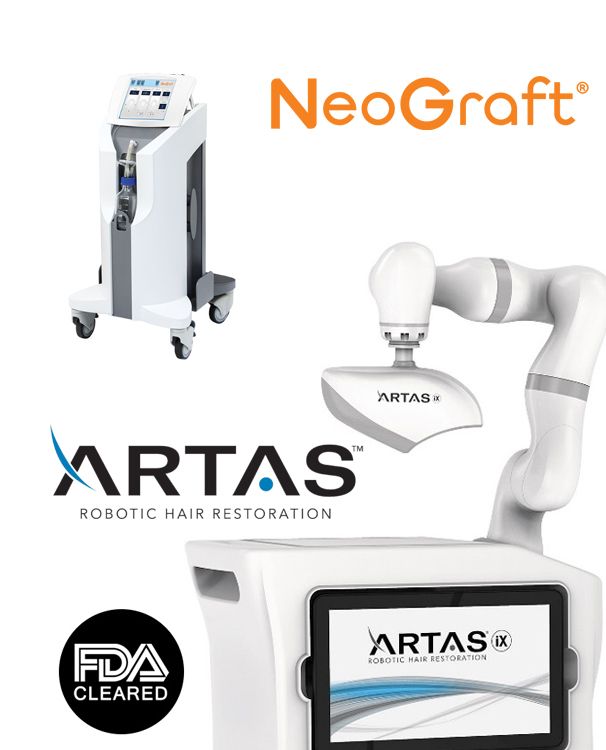
FUE hair transplantation moves healthy follicles from a suitable donor area into places where additional coverage is needed. Youthful Images offers both ARTAS robotic FUE and NeoGraft FUE.
Your recommendation depends on the diagnosis, the stability of the hair-loss pattern, the condition of the remaining follicles, your medical history, and what can be accomplished realistically. Treatment may begin at any level.
Healthy-looking hair begins with consistent care of the scalp and hair fiber. Root Revival Home Care combines four products from the Dp Dermaceuticals EXO-GROW collection into one professionally guided system. The formulas are intended to work together, so the initial system is sold as a complete set. Individual products may be purchased separately as refills.
The system includes:
The complete four-product system is $345. Because the products are designed to be used together, they are not sold individually with an initial enrollment. Individual refill products may be purchased as needed.
Dr. Felice may recommend Root Revival Home Care as an early intervention, as support during an in-office treatment series, or as part of a longer-term maintenance plan. The products are not prescription hair-loss medications, and they do not replace a medical evaluation. Minoxidil, finasteride, nutritional assessment, or another medical option may still be discussed when clinically appropriate.
When home care alone does not match the degree of thinning or the goals of the patient, an in-office treatment may be added. These options work with follicles that are still present. They cannot place new follicles into a permanently bald area, which is why the diagnosis and examination matter.
Dr. Felice may recommend scalp microneedling, platelet-rich fibrin matrix treatment, or a plan that uses one of these options alongside home care. The number and spacing of appointments are based on the treatment selected, the pattern of loss, response, and maintenance needs.
Scalp microneedling creates controlled microchannels with a professional microneedling device. Youthful Images pairs the procedure with a professional EXO-GROW serum as part of its scalp-support protocol. The appointment is intended for selected patients with thinning hair and follicles that remain present in the treatment area.
Patients may experience temporary redness, tenderness, tightness, or sensitivity after treatment. Dr. Felice and the Youthful Images team provide instructions for cleansing the scalp, resuming hair products, exercising, and protecting the treated area. Scalp microneedling is not an FDA-cleared indication for microneedling devices, and these devices have not been cleared specifically to deliver topical products into the skin. The potential role, alternatives, and limitations should be reviewed during consultation.
Scalp microneedling pricing:
SELPHYL platelet-rich fibrin matrix, or PRFM, begins with a small sample of your own blood. The sample is processed to separate platelet-rich plasma and convert it into a fibrin matrix. This matrix acts as a scaffold that helps localize the platelets within the treatment area. The prepared PRFM is then administered across selected areas of the scalp.
PRFM differs from a conventional liquid PRP preparation because the platelets are suspended within a fibrin matrix. That design provides the rationale for a more sustained local release of platelet-associated growth factors. It does not guarantee a particular amount of growth or make PRFM appropriate for every cause of hair loss.
The SELPHYL system is cleared for preparing autologous PRP for a specific orthopedic use. Its injection for hair restoration is an off-label application, and its safety and effectiveness for hair restoration have not been established through FDA approval. Dr. Felice can explain why he may recommend it, the available evidence, expected limitations, and alternative options.
SELPHYL PRFM pricing:
Temporary soreness, swelling, pinpoint bleeding, or bruising can occur around the injection sites. Activity and scalp-care instructions are individualized after treatment.
There comes a point when supporting existing follicles may not create the coverage a patient wants. If follicles have been permanently lost, Dr. Felice may recommend follicular unit extraction, commonly called FUE.
FUE moves individual follicular units from an appropriate donor area, usually along the back and sides of the scalp, into areas where additional hair is needed. The procedure can rebuild a receding hairline, add coverage through the frontal scalp or crown, and address selected areas of stable permanent loss. Each plan must respect the finite donor supply.
Hair transplantation at Youthful Images is planned and overseen by Dr. Felice. He evaluates donor density, hair caliber, curl pattern, scalp-to-hair contrast, the likely progression of loss, and the number of grafts that can be removed without leaving the donor region looking depleted. Recipient sites are designed around the face, age, existing hair, and the natural direction of growth.
Youthful Images offers two FUE technologies. Both transplant your own living follicles and avoid the long linear donor scar associated with strip harvesting. Each extraction still creates a tiny circular scar, so FUE should not be described as scarless.
ARTAS uses digital imaging, software-guided follicle analysis, and robotic assistance during extraction. It can map the donor area and evaluate characteristics such as follicle angle, direction, and spacing. Candidacy depends partly on the way the system recognizes the patient's hair and donor anatomy. This technology can only be used for straight hair.
NeoGraft uses an operator-controlled pneumatic handpiece to assist with follicular extraction and implantation. The handheld system gives the surgical team direct control over the location and angle of extraction and can provide flexibility across different hair patterns, textures, donor areas, and treatment sizes. This technology is particularly useful for women and curly hair.
Neither technology is automatically better. Dr. Felice selects the approach after examining the donor supply, hair characteristics, recipient area, graft requirement, and long-term pattern of loss.
The scalp is numbed with local anesthesia, and patients remain awake during treatment. Individual follicular units are extracted through small circular openings, protected and organized, and then placed into planned recipient sites. The angle, direction, spacing, and distribution of those grafts help determine whether the new growth blends naturally.
Treatment commonly lasts several hours. The exact time depends on the graft count, donor access, technology, and the area being restored.
Redness, short donor hairs, tenderness, swelling, and small crusts can remain visible for approximately one to two weeks. Transplanted hair shafts commonly shed during the early healing period. New growth may begin around three to four months, with increasing coverage developing between six and twelve months. Thickening and maturation can continue beyond one year.
A transplant can move follicles into an area of established loss. It does not stop untreated native hair from following its existing pattern of thinning.
Consider a patient who rebuilds the frontal hairline but does nothing to preserve the vulnerable hair immediately behind it. The transplanted follicles may continue growing while the surrounding native hair becomes progressively thinner. The result can lose its continuity even though the transplanted follicles remain healthy.
Long-term planning helps protect against that disconnect. Dr. Felice may recommend home care, medication, scalp treatment, or another maintenance strategy before or after surgery. The purpose is to support the hair that remains and preserve the balance of the overall result.
Yes, when a combined plan is appropriate. Root Revival Home Care may support a consistent routine between office visits. Microneedling or PRFM may be used as part of a nonsurgical plan or considered around a transplant timeline. Medical hair-maintenance options may also be discussed when indicated.
The sequence matters. Products and procedures should not be added simply because they are available. Dr. Felice considers scalp healing, the treatment area, the cause of loss, and the goals of each intervention before recommending how they fit together.
Hair changes take time because follicles move through natural growth and resting phases. Home care may improve the way the scalp and hair feel or look before a measurable change in density is apparent. Response to microneedling or platelet-based treatment varies, and a series may be completed before progress can be assessed meaningfully.
After FUE transplantation, the early transplanted shafts commonly shed. New hairs may begin around the third or fourth month. Coverage generally becomes easier to appreciate around six months and continues developing through twelve months. Crown growth and final maturation can take longer.
Standardized photographs and follow-up visits help Dr. Felice evaluate changes over time. No hair-restoration treatment can guarantee a specific density, growth rate, or response.
Root Revival Care provides several entry points:
Hair transplant pricing depends primarily on the number of grafts planned, the treatment area, donor characteristics, technology, procedure length, and whether restoration should be completed in one procedure or stages. Youthful Images provides an individualized estimate after Dr. Felice examines the donor and recipient areas.
Treatment prices and recommended schedules may change. Current pricing, package terms, and financing availability should be confirmed with Youthful Images before enrollment.
The consultation is designed to answer a more useful question than "Which treatment should I buy?" Dr. Felice and his staff examine what is happening now and what the pattern may look like in the future.
Your evaluation may include discussion of:
Certain types of sudden, inflammatory, scarring, or medically driven hair loss may require additional evaluation or referral before an aesthetic treatment begins. Honest turn-aways are part of responsible hair restoration.
Root Revival Care is built around continuity. The same practice can guide early maintenance, perform in-office scalp treatments, and provide surgical restoration when transplantation becomes appropriate.
Dr. Patrick Felice brings the perspective of a board-certified plastic surgeon to the entire plan. His role includes diagnosing whether an aesthetic treatment makes sense, protecting the donor area, designing a believable hairline, setting realistic expectations, and recognizing when preservation deserves priority over surgery.
Patients from Avon, Farmington, Greater Hartford, and throughout Connecticut can receive a plan calibrated to their current stage of hair loss without being pushed toward the most intensive option.
No. The levels organize the available options; they are not prerequisites. Dr. Felice may recommend home care, an in-office treatment, transplantation, medical management, further evaluation, or a combination based on your diagnosis and goals.
The EXO-GROW system is a topical hair-and-scalp care program, not a prescription medication or an FDA-approved replacement for minoxidil or finasteride. Dr. Felice can discuss the potential role of medication and whether it fits your health history and treatment plan.
Conventional PRP is a liquid platelet-rich plasma preparation. The problem is that plasma injected into the area is short-lived (minutes), leaving a very short window for stem cell stimulation. PRFM incorporates platelets into a fibrin matrix designed to help retain them within the treatment area. Youthful Images uses the SELPHYL system to prepare PRFM from a patient's own blood. This allows the stem cells to be in contact with the hair follicles for 4-5 days. Results vary, and the system is not FDA-approved specifically for hair restoration.
Patients may feel vibration, pressure, or prickling during treatment. The scalp can feel tender or sensitive afterward. Comfort measures, treatment depth, and aftercare are reviewed during the appointment. Experiences vary with scalp sensitivity and the area being treated.
Nonsurgical treatments work with follicles that remain present. They cannot reliably replace follicles that have been permanently lost. When an area no longer has meaningful follicular activity, FUE transplantation may be considered if the patient has an adequate donor supply.
Yes, a maintenance plan may be recommended after transplantation to support the scalp and help protect vulnerable native hair. Timing is important while grafts heal, so products and in-office treatments should be resumed only according to Dr. Felice's instructions.
Pattern hair loss often continues over time. Ongoing maintenance may therefore be recommended, but the specific products, medications, or procedures can change as your hair and goals change. Follow-up visits allow the plan to be adjusted rather than continued automatically. Progressive hair loss is a lifetime process and requires observation and treatment by developing a relationship with a qualified hair specialist offering a comprehensive program.
An examination is the only reliable way to decide. Dr. Felice evaluates whether follicles remain in the area, whether the pattern is stable, how much donor hair is available, and what degree of coverage can be created safely. A transplant may be appropriate when established loss cannot be addressed adequately through preservation or stimulation alone.
Individual treatment recommendations and results vary. A medical evaluation is necessary to determine which hair-restoration options are appropriate for each patient.
Youthful Images
Plastic Surgery | MedSpa | Hair Restoration